Anno Domini
Clinic management software connecting scheduling, reception, medical care and financial operations.
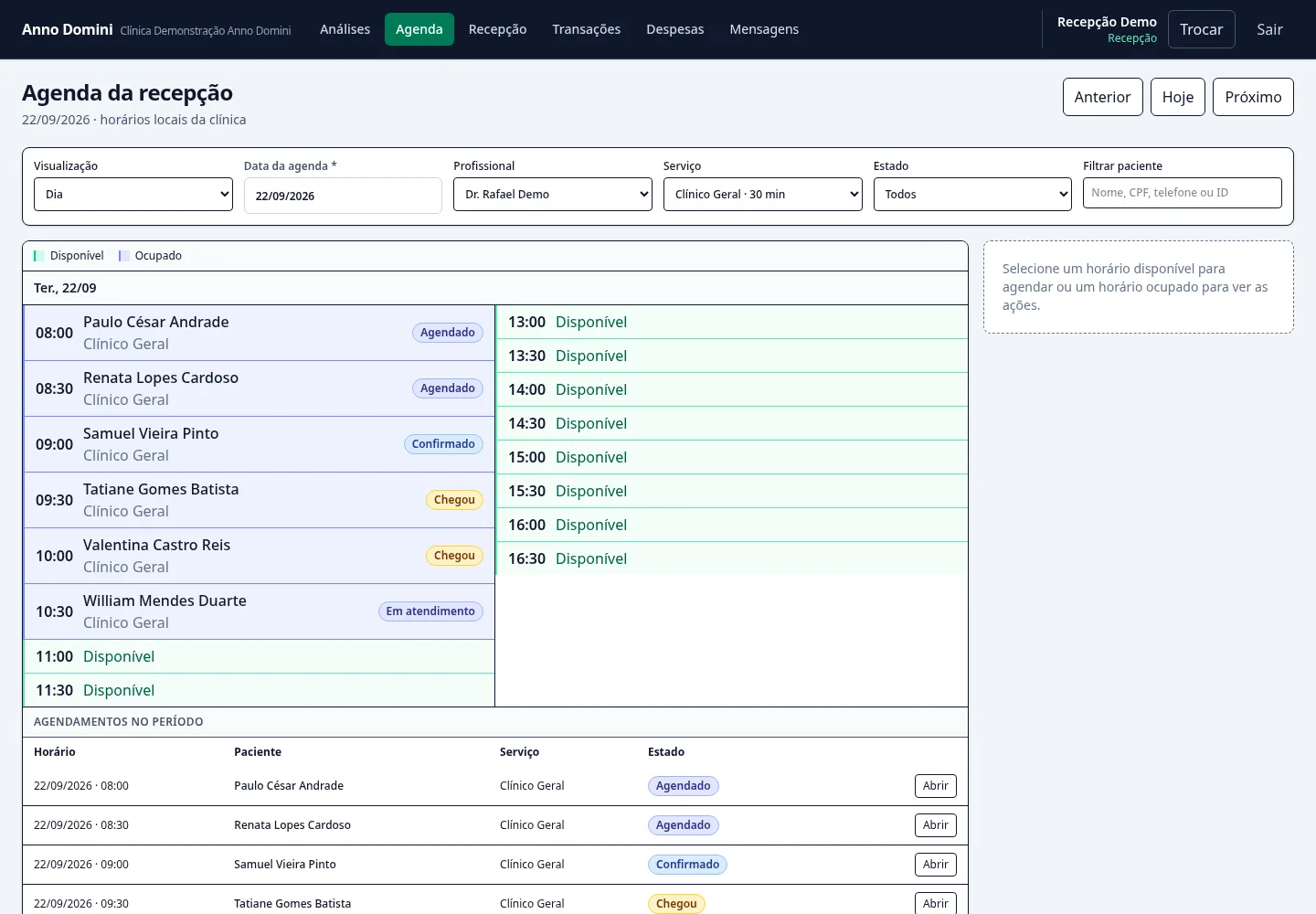
Screenshots from a local environment with fictional data. No real patient or operational data is shown.
About
Anno Domini connects the daily operations of a medical clinic. Reception staff manage appointments, check patients in and register walk-in visits, with charges linked to each visit. Doctors follow the queue and access patient history to record consultations and issue prescriptions and other clinical documents.
Payments, expenses and reports complete the administrative workflow, with separate workspaces and permissions for reception, doctors and administrators. In operational use in Brazil, the application is part of a management platform used by three companies. The source code is private.
- Appointments
- Patients
- Clinical records
- Procedures
- Finance
- Reports
- Users and permissions
- Documents and PDFs
Reception
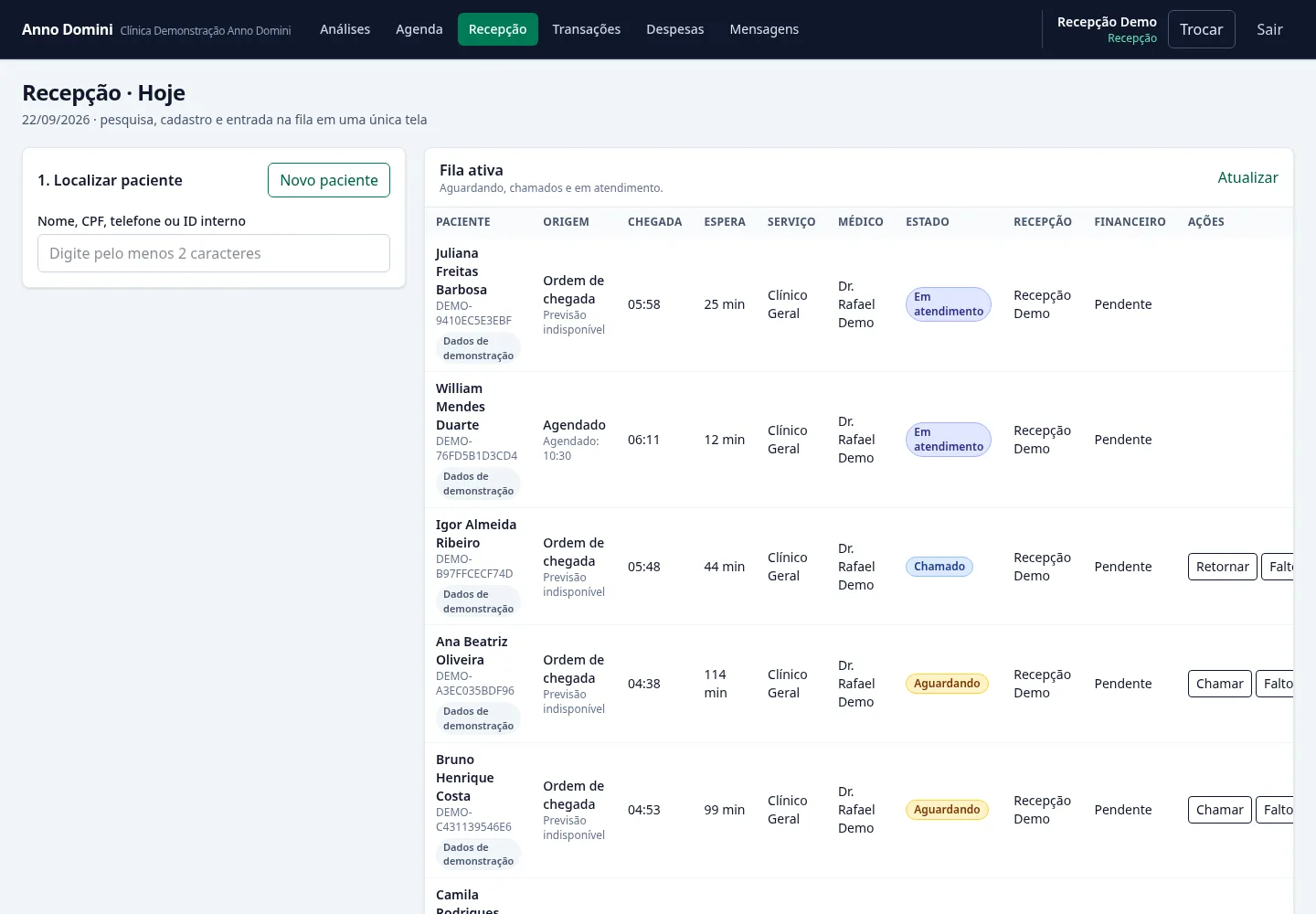
The reception screen combines the active queue, visit origin, waiting time, visit status and the actions staff use throughout the day.
Clinical records
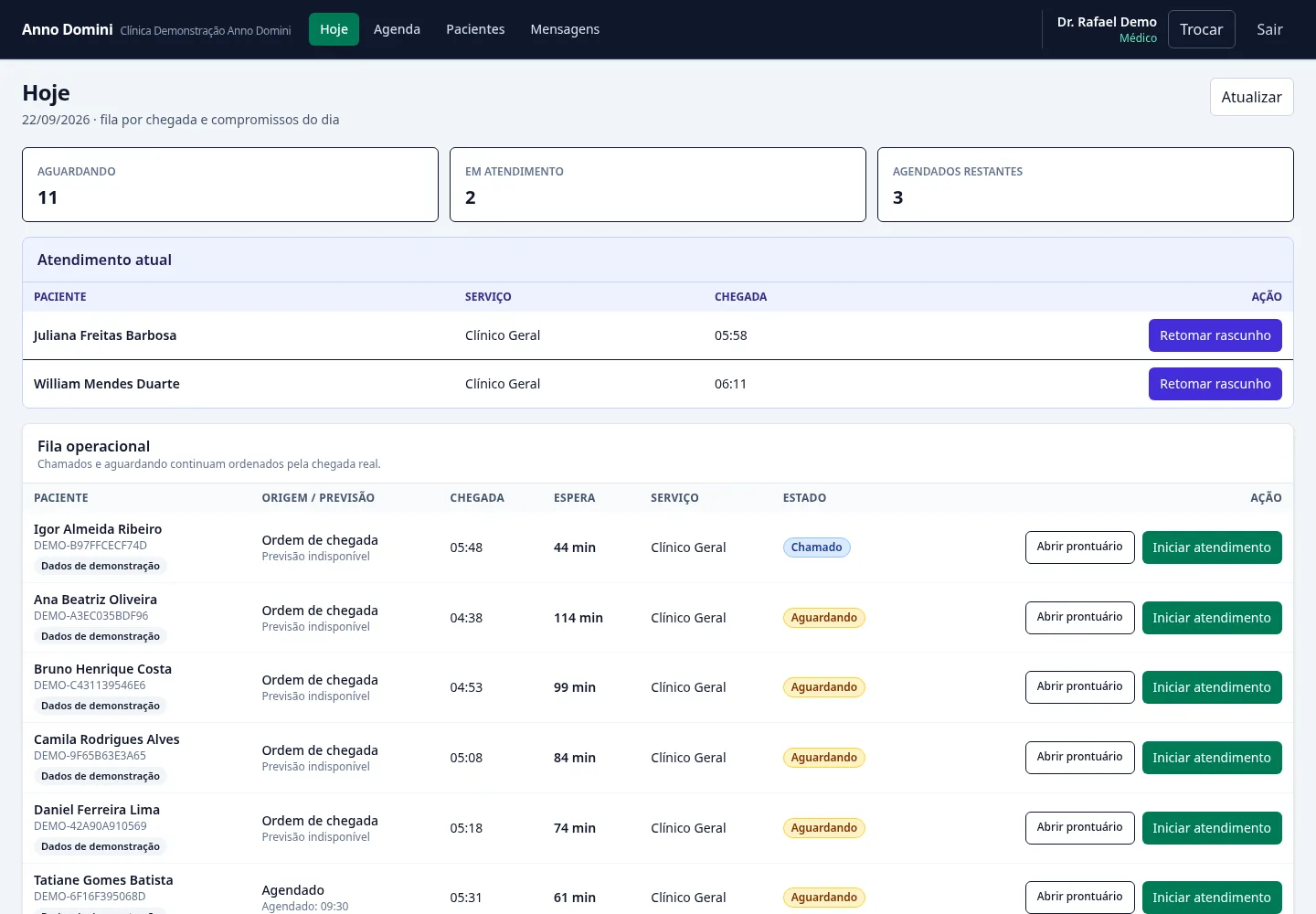
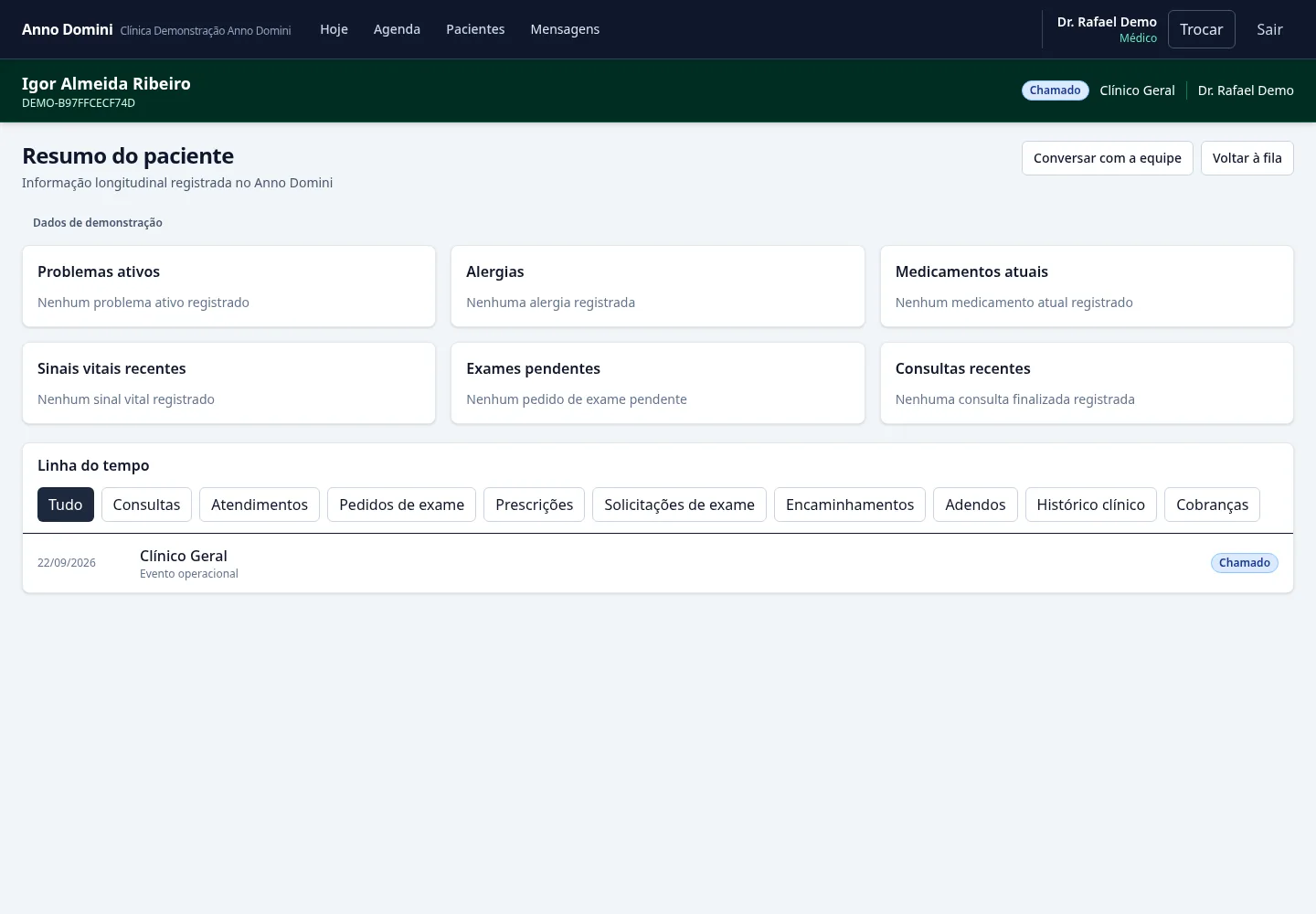
The doctor workspace separates patients awaiting reception from consultations already in the queue. The patient summary brings together alerts and the history of consultations, prescriptions, exams, documents and amendments.
Finance and reports
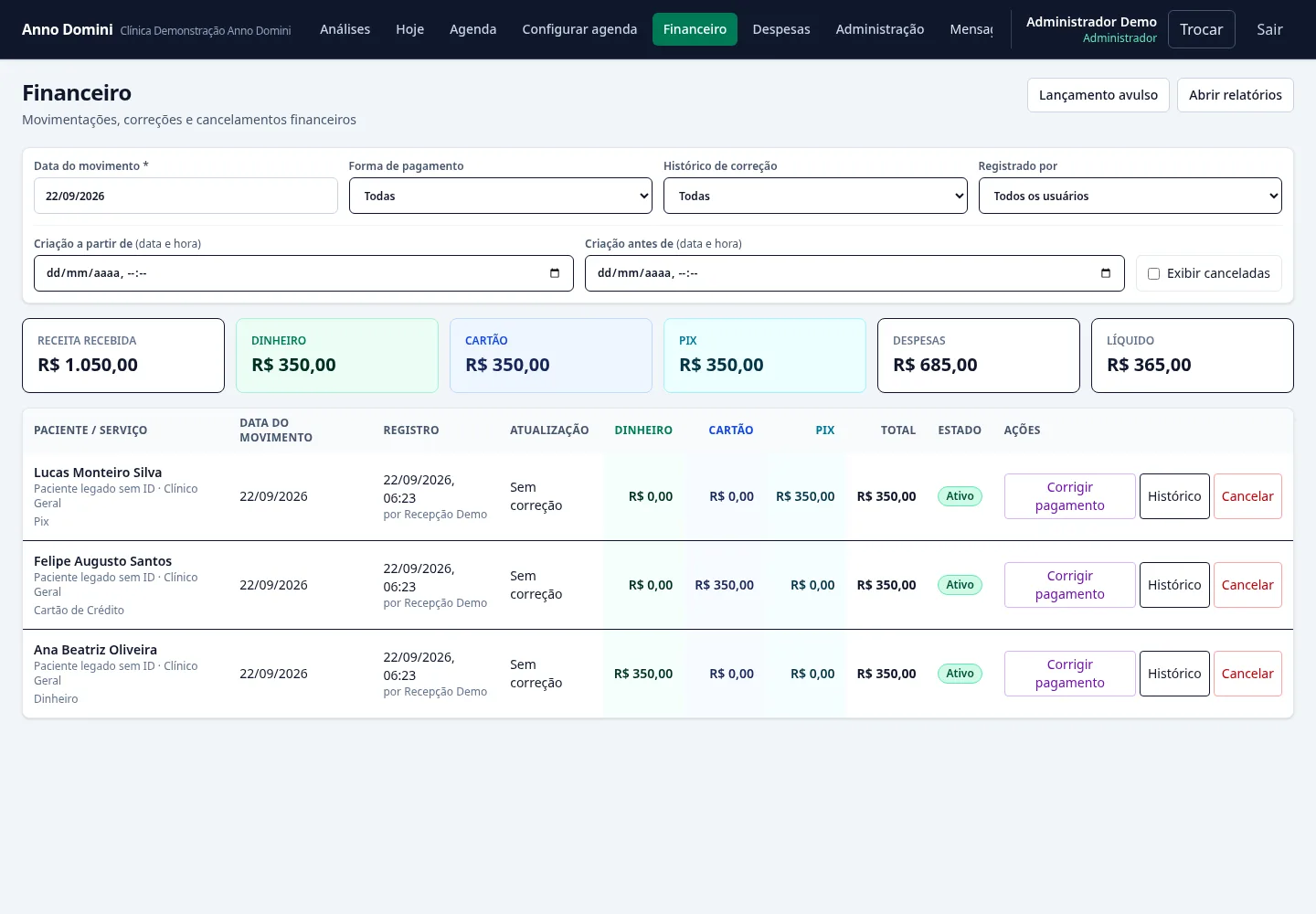
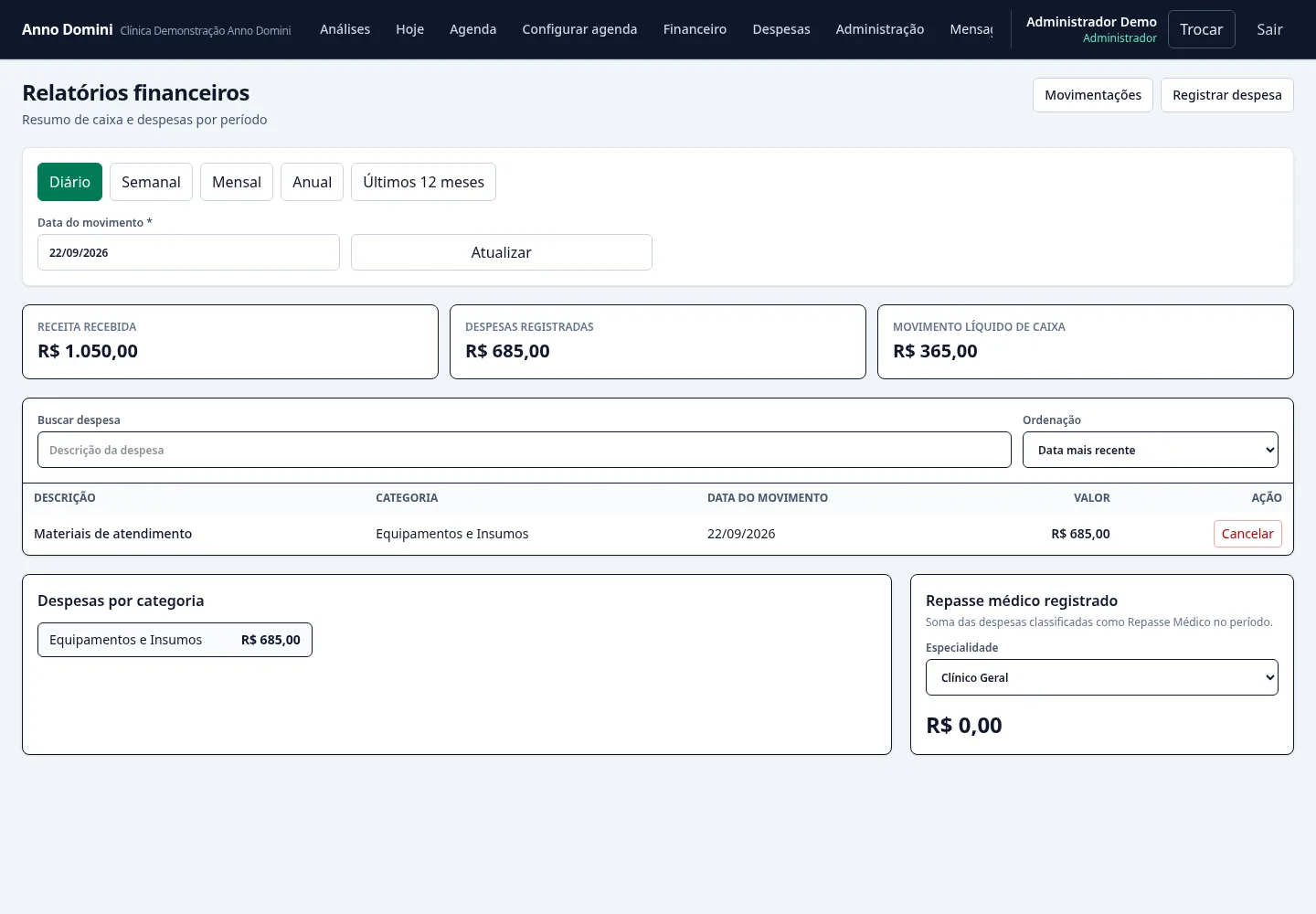
Charges remain linked to visits and can record payments in cash, Pix and cards. Financial screens retain corrections and cancellations; reports organize received revenue, expenses and cash movement by period.
Engineering
- 01
Clinical records
Finalized clinical records are not treated like ordinary forms. The application preserves the finalized snapshot, records amendments with a reason and author, and rejects writes made against an old version.
- 02
Permissions
Permissions are checked by the API. Administrators do not receive clinical access by default; doctors do not receive financial operations; reception can work with patients, visits, appointments and billing without editing clinical content.
- 03
Appointments and visits
Provider and room conflicts are validated on the server. Idempotency keys and unique indexes prevent duplicate visits or charges when an operation is repeated, while expected versions protect concurrent updates.
- 04
Documents and auditing
Prescriptions and other clinical documents have drafts, finalization, versions and server-generated PDFs. Audit events record administrative and clinical actions without copying chart contents into the log.
Architecture
The frontend is a React/Vite application. It calls a Node.js/Express API responsible for authentication, permissions and business rules. Records are stored in MongoDB through Mongoose. Socket.IO is used for internal notifications, and PDF documents are generated on the server.
Infrastructure
The application uses Docker Compose on Linux. MongoDB and the API remain on the internal Compose network, while Nginx publishes the interface and proxies requests. The repository also contains health checks and documented backup and restore procedures.
Project details
- role
- design and full-stack development
- period
- 2024–2026
- sector
- healthcare · clinic management
- status
- in operational use in Brazil
- stack
- React, JavaScript, Node.js, Express, MongoDB, Mongoose, Socket.IO, Docker
- source
- private