Fortitudo

Passages I return to when I need to remember how to continue. We forget, more often than not, the important things we have learned (whatever their cost, whatever form the lesson took). Man is a foolish creature, and should not be destroyed by comfort.

Seneca

Letters to Lucilius, Letter I

Proceed in this way, dear Lucilius: claim the right to dispose of yourself, gather and make use of all the time that until now was stolen from you, taken from you, or slipped through your hands. Be convinced that things are as I describe them: some of our time is taken from us, some passes without our noticing, and some we let slip away. But worst of all is the time wasted through negligence. If you look closely, for much of our life we act badly, for most of it we do nothing, and throughout our life we act to no purpose.

Letter I, 1

Can you point to anyone who gives time its proper value, makes good use of the day, and understands that each day they die a little? It is a mistake to imagine that death lies ahead of us: much of it already belongs to the past; all our past life is already in death’s domain!

Letter I, 2

Proceed, then, dear Lucilius, as you say: fill all your hours! If you take hold of today, you will depend less on tomorrow. As we keep putting things off, life passes by. Nothing belongs to us, Lucilius; time alone is truly ours.

Letter I, 2–3
Dante Alighieri

Inferno, Canto VIII

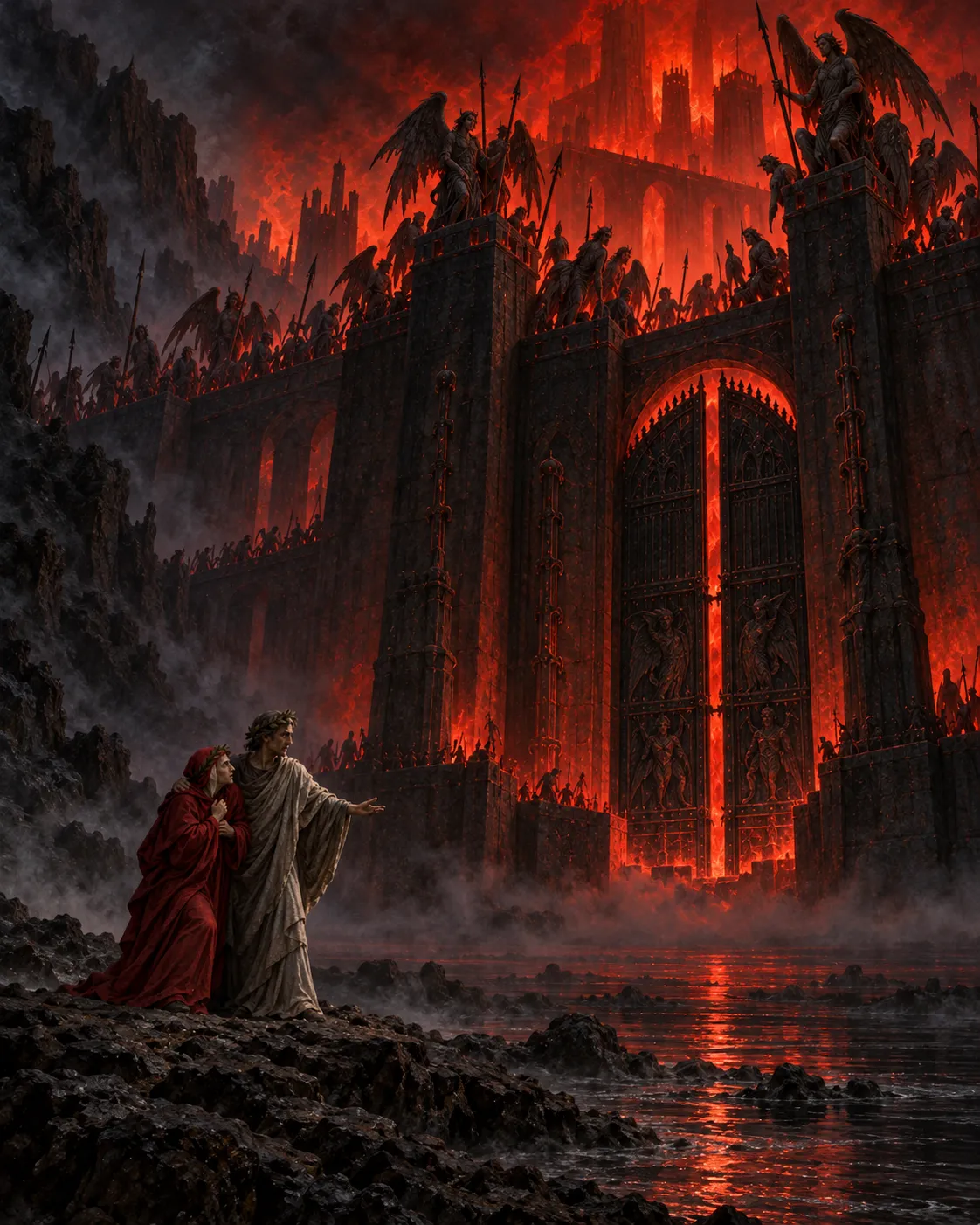
Dante and Virgil before the burning gates of the City of Dis
Dante and Virgil before the gates of the City of Dis — Inferno, VIII–IX

At the gates of the City of Dis, the fallen angels refuse Dante and Virgil passage. Dante is afraid, and even Virgil appears troubled. Still, Virgil reminds him that the road they have been given cannot ultimately be taken from them.

Do not fear; no one can take our passage from us, for it has been granted by one with such authority.

Inferno VIII, 104–111

Comfort your weary spirit and feed it with good hope.

A reminder to preserve hope before circumstances have improved, not only after.

Virgil

Aeneid, Book I

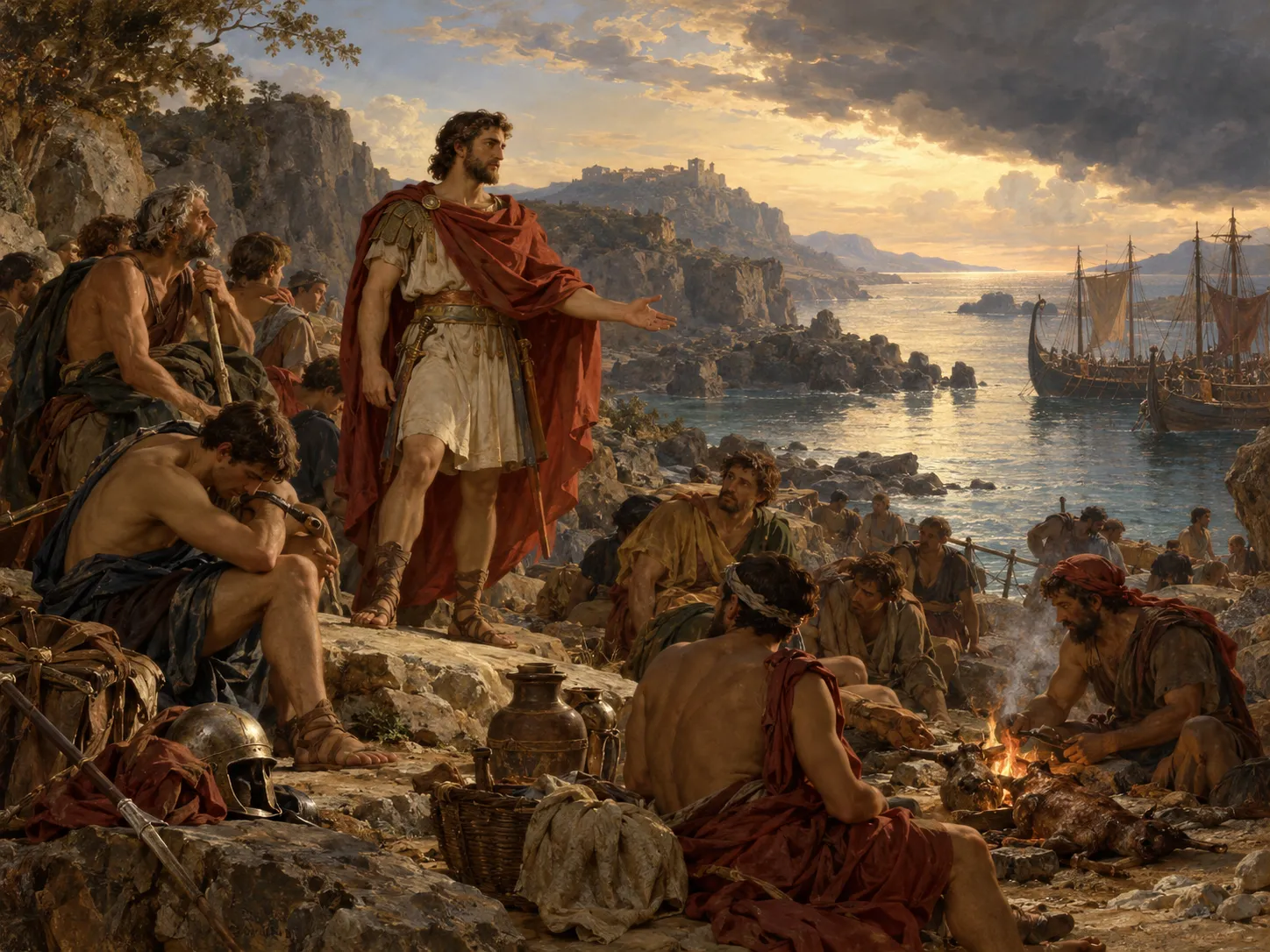
Aeneas speaks to his exhausted companions on the coast of Libya, with the surviving fleet behind them.
Aeneas encourages his companions on the coast of Libya after the storm — Aeneid, I

After a storm scatters the Trojan fleet, Aeneas and his companions reach the coast of Libya exhausted. In relative safety, he tries to restore their courage, even as he hides his own suffering.

Perhaps one day even these things will be a joy to remember.

Aeneid I, 203